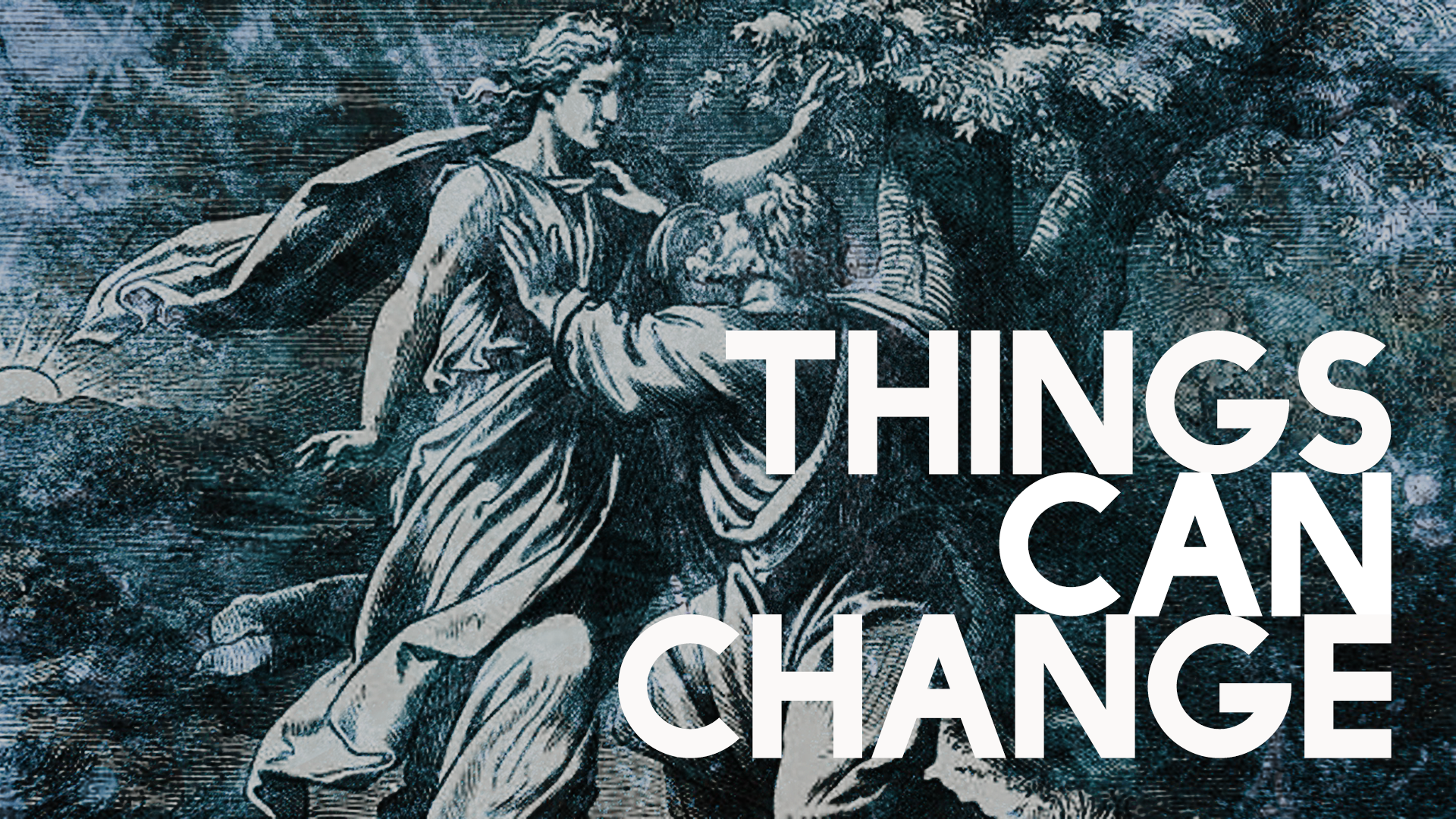
Until the Trumpet Sounds by Tracey Bentley

We lost you, sister,
and our hearts are heavy with grief.
Yet somewhere beneath the sorrow
there is a quiet faith—
a still, small knowing
that you are finally free
from fear, from pain,
from the battles we could never win for you.

Our story was never simple.

We grew up in the tangled places of life—
different fathers,
a mother doing the best she could,
and grandparents whose love
gave us shelter,
a place to belong.

Then came a new father,
a new home,
new chapters written
into the story of our lives.
And somehow, through every change,
through every beginning and ending,
we remained sisters.

Life carried us onward—
to steadfast husbands,
to motherhood,
to the seasons that shaped us
and slowly made us women.

Somewhere along the way,
we found our common ground,
and perhaps, almost, a friendship—
a bond not born because life was easy,
but because life was hard.

I thought we had defied the odds.

We held on through trials,
through illness,
through years that tested
the deepest places of our hearts.
And beneath all the hurt,
beneath the distance and the silence,
the love was always there.

There were wounds we could not mend,
roads we could not understand.
We would take one step toward healing,
only to find ourselves
two steps back.

There were questions
that lingered between us,
questions that may never
find their answers now.

You searched for something—
perhaps riches,
perhaps new places,
new faces,
new experiences,
or simply a way
to outrun the shadows
that followed you.

And while we watched,
wanting so desperately
to reach you,
our hearts broke
again and again.

Perhaps the deepest sorrow
was watching you search so far
for treasures outside yourself
while the truest treasures—
love, family, belonging—
were already waiting
for you to see.

Now you are gone.

And Mom is gone too.

And I am left here
with the silence,
the memories,
the unanswered questions,
and a longing—
more than anything—
for peace.

So I choose to believe
that what illness stole from you
has been restored.

That the mind is quiet now.
The fear has fallen away.
The shame is gone.
The confusion has lifted.
The burdens you carried
are no longer yours to bear.

And when the trumpet sounds,
I will look for you—

not as you were
in those final days,
but as you were always meant to be:

whole,
content,
well,
and free.

Until then, sister,
I will carry our story
with all its broken pieces.

I will carry the laughter
and the tears,
the closeness and the distance,
the things we understood
and the things we never could.

Because complicated
does not mean unloved.

Broken
does not mean forgotten.

And imperfect
does not mean
there was no love.

Through every trial,
every distance,
every wound—

the love was always there.

And it still is
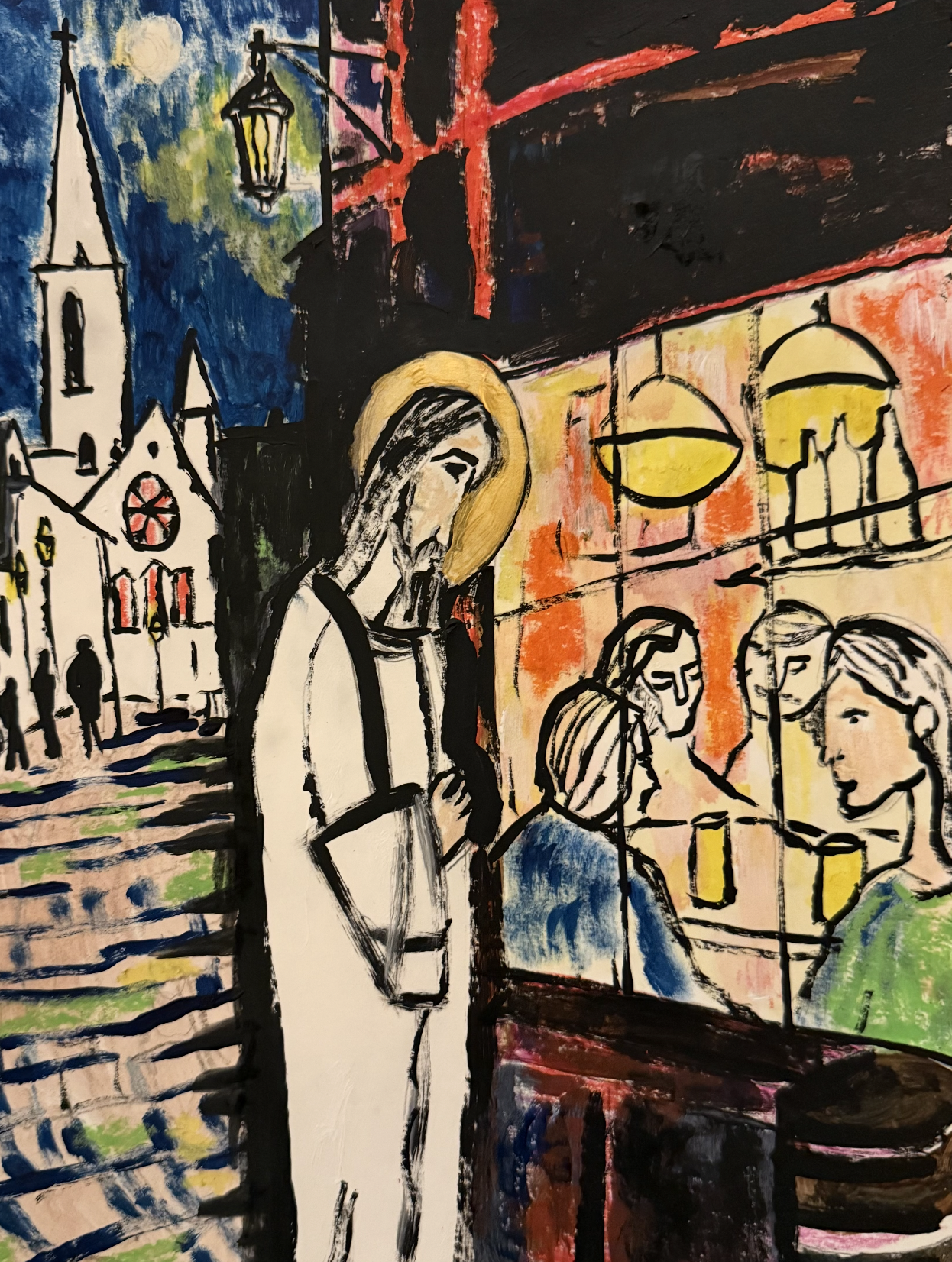
What is a Church Home? by Jerome Hammack

Webster defines a home as a place of residence, like a house or apartment, or the social unit of a family living together. Webster also defines church as a building for public worship, an organized body of religious believers, and the act of public worship itself.

These are two independent ideas that when applied together foster a healthy community that has the capability of embodying Jesus. So how do we go from a church to a church home? There are characteristics of a home that when applied to church that can help interweave these two independent ideas.

Warmth and belonging. There is a reason Dorothy clicked those red heels and repeated the phrase “There is no place like home.” Home is a place of belonging and safety. It is the first place we think to turn when we are in danger. Home in part feels safe because of the familiar faces that reside there. Large churches, although they have their place, tend to lose this piece of the puzzle along the way. It is hard to feel at home when you don’t experience familiar faces and without familiar faces the safety of home goes by the wayside. With a church body that commits to regular attendance those familiar faces begin to show up.

Another characteristic of a home are chores. Growing up most kids are given a chore list be it taking out the trash, cleaning your room, or doing the dishes. Regardless of what the chore itself is, chores are a core part of a home. It is the collective buy in of the family unit to put in the work to help make the household run. In this same way in order for a church to move closer to a church home there are chores that need to be done from those that live there. There are tangible needs that a church has; from cleaning, to children care, to being the first smiling familiar face that people see when they arrive. When you do these chores you are buying in to this place being home. Chores aren’t fun but with them comes an ownership piece that isn’t there if those chores aren’t being done.

As much as home is a refuge and safe place that doesn’t mean that it is always rainbows and butterflies. There is strife and conflict in a home that isn’t necessarily a bad thing. There are difficult conversations that are had within a home. This isn’t a free license to judge or call out but there is an accountability piece that is healthy. If you notice someone struggling approaching with love means not attacking while also not condoning the behavior.

So what does a church home look like? It looks like living life in community outside of just the Sunday gathering. It looks like sharing the workload not from a place of obligation but from an ownership standpoint. It looks like being accountable and holding othersaccountable as well. It looks like actually loving one another which can sometimes mean difficult conversations. It looks like receiving those difficult conversations with grace and understanding that it is coming from a place of love and concern.

As we live out this church home life we model what it means to follow Christ to those guests that come to our home. That they may experience something different and know what it means to be home.

Asaph Reading Guide

Week 1: The Honest Psalmist

  • Sunday Text: Psalm 73

  • Daily Companion Readings:

    • Monday: Psalm 13 – “How long, O Lord?”

    • Tuesday: Habakkuk 1:2–4 – The prophet’s lament

    • Wednesday: John 6:66–69 – “Lord, to whom shall we go?”

    • Thursday: Psalm 42 – “Why are you downcast, O my soul?”

    • Friday: Romans 8:18–28 – Hope amid groaning

Week 2: The God Who Is Judge and Shepherd

  • Sunday Text: Psalm 50

  • Daily Companion Readings:

    • Monday: Micah 6:6–8 – What does the Lord require?

    • Tuesday: Psalm 24 – The King of Glory comes in

    • Wednesday: Matthew 23:23–28 – Jesus confronts empty religion

    • Thursday: Amos 5:21–24 – Let justice roll down

    • Friday: John 10:11–15 – The Good Shepherd

Week 3: The Long Memory of God’s People

  • Sunday Text: Psalm 77 (and 78 excerpts)

  • Daily Companion Readings:

    • Monday: Exodus 14:19–31 – God parts the sea

    • Tuesday: Psalm 105:1–11 – Remember His wonders

    • Wednesday: Deuteronomy 6:4–12 – Do not forget the Lord

    • Thursday: Luke 22:14–20 – “Do this in remembrance of me”

    • Friday: Hebrews 12:1–3 – Surrounded by witnesses

Week 4: The Song that Leads to Christ

  • Sunday Texts: Psalm 82 / John 10:34–36

  • Daily Companion Readings:

    • Monday: Isaiah 11:1–9 – The righteous judge

    • Tuesday: Luke 4:16–21 – Jesus announces Jubilee

    • Wednesday: Matthew 25:31–40 – The least of these

    • Thursday: Revelation 5:6–10 – The Lamb who was slain

    • Friday: Revelation 21:1–5 – All things made new

Part 1: Innovation & Heritage

by Gavin Linderman


How do we church planters honor our past while simultaneously blessing our future? This inquiry isn’t just a qualifying exercise. It’s a deeply personal one that shapes the way we approach the church’s mission in a rapidly changing world. The culture that unfolds before us is as ripe as the reformation that preceded us.

This question also carries personal weight for me. Twelve years after planting Axiom Church, I still feel the fruit of our father and mother, Cooper Hills Community Church, and my Mennonite Brethren family. This tension is one for the optimist and the brave.

Recently, I had an experience that underscored the weight of this question. On a flight back to Phoenix from a church planting conference, of all things, I was seated next to five priests in the exit aisle—perhaps a curious twist of divine humor.

These were not ordinary priests but a dedicated group committed to the Latin Vulgate. They dress in traditional robes and conduct masses strictly in Latin, adhering to the “Quo Primum.” This papal bull, decreed by Pope St. Pius V on July 14, 1570, states, “It shall be unlawful henceforth and forever throughout the Christian world to sing or to read Masses according to any formula other than that of this Missal.”

As we conversed, the young priest to my right shared a thought that struck me profoundly: “The Devil sits on the throne at the heart of man’s innovation.” This statement caused me pause, especially after attending a conference that celebrated the “new” and “brightest” ways of church planting amidst the chaos of modern society. It made me ponder the inherent tension and weight we face as we consider how to engage with the future of the church. What role does innovation play in a time that requires such agility?

The Journey: Deep Pain & Loss

by Steve Reimer

My experiences of deep pain or loss have often led to significant changes in my spiritual life.

No one enjoys pain and yet everyone experiences it. It is part of life and part of our spiritual journey. Pain is not only physical; we can experience emotional suffering within ourselves and from relationship with others. Talking about pain and suffering is like talking about taxes or a visit to the dentist. We prefer to ignore it as long as possible. When we can no longer ignore it, we try to endure it as quickly as we can so we can move past it and hopefully forget about it.

But those who have journeyed far in their relationship with Jesus tell us that some of the most profitable places in their journey have been connected to pain and suffering. Pain is often followed by a deeper joy, a more intimate relationship with Jesus, and a greater sense of freedom and contentment than experienced prior to the suffering. Why is this so?

One of the primary roles pain plays in our lives is to help us let go of things we have become overly attached to. It is human nature to value things in our lives in ways that are unhealthy for us—not just physical things, but emotional and spiritual (non-material) things, also. These include approval from others, control over others and our environment, security in possessions, pleasure, and more.

We pursue these things believing that they will meet our deep needs, especially the need for love. But eventually these things will fail us, and this leads to pain and suffering. Pain always invites us to let go of something. In this case, our pain can be a natural way of reordering our desires and helping us place our needs before God.

Pain teaches us about ourselves, our unhealthy dependence on things, and helps us depend more on God and draw closer to Him. As we journey through this transition, we find that by letting go of something temporal we experience freedom and joy. The book of Job offers an example of this spiritual dynamic. Job experienced significant suffering.

Job was attached to a certain perspective about life and about God. When things went counter to how he thought they should, Job cried out to God. Eventually, God confronted Job and Job had to let go of his attachments. When Job surrendered, he experienced God in a new way and replied,  “My ears had heard of you but now my eyes have seen you. Therefore I despise myself and repent in dust and ashes” (Job 42:5-6, NIV).

When Job looked back on his journey and the suffering he had endured, he acknowledged that he had transitioned into a richer phase of his journey. His relationship with God was stronger and his understanding of God clearer. By contrast, Job regretted and even despised his previous place on the journey. So, too, will it be with us.

Our attachments hold us back. When we allow God to use pain as a way of helping us let go of those things, we will recognize that all along we had been settling for less.

Seasons of Liturgy

A Contemplative Poster Series by Johnny Kerr

Liturgy is a word we don't hear often in modernity, and almost never outside of its typical religious context. Derived from Latin, Greek, and French, it roughly translates to something like "the work of the people". Additional words—such as "public", "service", and "worship"—can also help to contextualize and express the rich nuances at the heart of liturgy.

       The orthodox Christian calendar divides the year into themed liturgical seasons, much like our weather seasons. Familiarity and acceptance of these traditions vary greatly, depending on one's upbringing and denominational affiliations. While some might view these practices as rigid, perhaps even oppressive, others find them to be unifying and centering. Other communities and denominations have largely dispensed with or forgotten them altogether. Nevertheless, their impact on Western culture is undeniable as many in the non-religious mainstream continue, at least to some degree, observing the annual rhythms of Easter and (especially) Christmas.

      Unfortunately, these traditions have at times been misunderstood and even abused by the church, its leaders, and parishioners. However, it would be a shame to, as the saying goes, "throw the baby out with the bathwater", as our modern society tends to do. While it is important to name and reject such abuses, I don't think it means we must also reject the traditions outright. I think these practices still hold much potential value for those who follow The Way of Jesus today—though only when engaged willingly and not enforced through dogmatic legalism.

       Artists, as much as politicians and religious figures throughout history, have shared in the responsibility of stewarding culture in their day. This means, in part, that we play a role in voicing those aspects of culture that we want to reject, and those we desire to redeem. I hope that these posters, in some small way, put on display the richness these liturgical seasons still have to offer those who desire to cultivate a vibrant spiritual life.

Each poster was designed in vector format using Adobe Illustrator and is presented here as 11" x 17" archival prints. The overall design is largely inspired by the International Typographic Style (A.K.A. Swiss Style), particularly the grid system approach pioneered by Josef Müller-Brockmann in the first half of the 20th century.


       I have a great appreciation for Swiss design in general, but I also chose it for this project because of the driving ethos behind the movement; it aimed, among other things, to create effective design standards suitable for a variety of cultural-linguistic contexts. You might say it was our first globally-minded information design movement. The principles of the grid system also serve to simplify and harmonize the presentation of text and imagery through clear visual hierarchy while avoiding symmetry for more dynamic composition arrangements.


       Each liturgical season represented by my posters orients the practitioner around different aspects of the Gospel (the "good news" Jesus came to share with the world, according to the Christian tradition). For example, Advent teaches us about preparation and anticipation, while Easter teaches us about redemption, reconciliation, and freedom. Since Jesus charged his disciples with spreading this good news throughout the world, the international style principles made sense as a device to visually engage the subject matter across various spiritual traditions. 


       Other sources of visual inspiration included Henri Matisse's cutouts and the graphic works of Saul Bass and Paul Rand.

    Each poster in the series also exhibits shared components from the broader liturgical tradition. For example, each includes a simple visual icon (visio) and a brief scripture passages (lectio). For the official holy days and periods of observance, I also included a short reflection in my own words that—when combined with the visual and scriptural components—hopefully illuminates the heart of the liturgy while inspiring reflection and contemplation throughout the season.


       Periods of nonobservance in the liturgical calendar are typically referred to as "ordinary time." Rather than create a poster for ordinary time, I chose the practice commonly known as "passing the peace" to express the heart of the daily Christian life in every season. In this practice, followers of Jesus greet others with some variation of "peace be with you" to keep ourselves oriented around the loving, peacemaking posture of Jesus as we move through the world extending love and peace to others.


       In the future, depending on inspiration and motivation, I may also expand this series to include other observances, such as Christmastide and Pentecost. For now, I thought it was time to put these out and see how others experience them. I welcome your feedback in the comments below.

       Peace be with you!


The Distant Song (Longing)

By Ross Bentley

Lately, I always feel unsatisfied. It follows me like a shadow. Not unhappy or ungrateful, but when life offers slow, quiet moments, I seem to sense that there's a need deep within, a proverbial itch that I can't seem to scratch, and it's there all the time, even when I'm not aware. I can feel it gnawing on my soul.

As I scurry through my day, I don't always notice. I'm so often captivated by my own importance, enthralled with my business. Things beyond me simply don't matter. I am all. But when I'm alone at the end of the day, 'counting my tips' as it were, when I sit in silence, that's when I hear it.

A faint song originating from way off in the distance, the melody effectively eluding me, audible only to my soul. It barely catches my attention, and I think I recognize it, I feel it, but I cannot seem to hum it or sing it. "I know this song!" my soul screams, aching to join in. But then it's gone; the tune remains just out of earshot. My brain ceaselessly scans its stores for the source of my memory, if it is a memory, but I come up with nothing. I cannot find the words, I cannot hum the tune. Maybe I don't know it, but why does it seem so familiar, so much a part of me? Why this deep connection to something I've never heard? I am tortured as I grow more desperate for this song to soothe my soul.

I try to think back to times when I could've heard, truly heard, this song that calls to me. Perhaps as a child. Did I fall asleep to it in my loneliness? Was it there when I lost my father? Did I hear it at my wedding? 'Maybe,' I say to each, still no closer to solving this riddle plaguing me.

I hear it less often these days. Once at work recently, sitting alone in emptiness, discouraged by the place I've ended up, a faint impression of the song was there. I know I heard it then. Still, I cannot recollect it. Desperation rises like tide, wanting to engulf me.

I must hear it! Now! I press my fingers into my ears, attempting to muffle the din, but to no avail. Still it eludes me. The clamor within now seems louder than any noise without. I'm truly at a loss. Why can't I hear it?

Am I the only one who cannot hear? Are others enjoying this song, humming it to themselves, but not sharing with me? My soul is tortured. A deep sadness draws me toward its
flame. Despair is now my master. 'Why? When? How long? Please!'

Lament (A letter from a father regarding his children)

by Cody Wilson

What world is this

to bring a child into?

There have been 565 mass shootings

in the United States this year.

More shootings than days.

The longest we lasted

without one was 18 days.

There is nothing new under the sun.

What constitutes a mass shooting

is 4 bodies.

Imagine my family—the ones

you know, the mass of us ash.

There is nothing new under the sun.

I forsake my son at the school gate.

I worry about the kind of holes

bullets make.

What kind of God

would wholly let us

be holed.      In.       Like the hole

I burn in my head

with the ember of every news story

that skims across my eyes.

I am screened with fears

of living and dying and living and—

there is nothing new under

the sun.

Of the victims of war,

the worst and most likely

to suffer are children.

More than 6000 children

have been killed

in Gaza since October.

There is nothing new under the sun.

I see this on the muted screen

as I lay on the ground,

the heaviest I can,

lifting my son

into laughter. I lift him but

I cannot lift myself    most days.

There is nothing new under the sun.

Oh my God. The crises—

climate // border // war // poverty // opioids // inequality //

health // displacement //  hunger // mental health //

Crises cries! We cry. Jesus wept.

Then brought Lazarus back—

but for too many beloveds to name,

there is no coming back.

There is no coming back from

the feeling you can do nothing

and the thought of eternity

still makes me fear more

than the thought of not

existing before or after

this life I was brought into.

We didn’t ask to be here.

There is nothing new under the sun.

Oh my god,

Why have you forsaken me?

There is plastic in our hearts.

It has broken the brain

barrier. Scientists predict

that over 20% of the world

will be uninhabitable by 2050.

There is nothing new under the sun.

What kind of world

did you bring your child into?

“The godly thing to do

is kill you,” says a man

to another in Israel

The godly thing is to build a wall

Though I break my spirit

against each new wall

I build against him.

The world is on fire and I’m watching a TV show about it.

There is nothing new under the sun.

“I would start trembling

my hands would tremble and start to hurt”

says a child about the war. About the water.

About there was none.

About his mother / about she wasn’t /

about—we call it conflict.

I pick my son up from school

and he is safe again

but there is a backpack

abandoned in the street somewhere.

There is nothing new under the sun.

For everything there is a season…

a time to be born, and a time to die...

…a time to tear, and a time to sew…

a time for love, and a time for hate;

a time for war, and a time for peace

There is nothing new under the sun.

"I saw murdered babies. I saw murdered

children. I saw mothers and children murdered together,”

says a man in Israel.

Then God said, “take your son, your only son,

whom you love—Isaac. Sacrifice him

to me as a burnt offering.”

Just kidding!

There is nothing new under the sun.

Nothing new but the son.

That same way I felt

when I held for the first time my own.

In bad dreams, I outlive him

In the bad world that I brought him into

which maybe he can change, but for now he still

draws on his face with marker

and I am glad. I see what I have co-created

and it is good. I am still learning to love

what every second gets closer to ending.

I am glad. I am thankful.

Thank you

for letting me shoulder the weight

of my children as I raise them

to see the sunset

over the fence

of my backyard.

Thank you for shouldering my weight.

Thank you for

the nurse who said within a heartbeat

I would go back

to the war. To the children.

Thank you for every little pang

which makes us more aware of our bodies,

however fleeting they might be.

Thank you to the heart

not just as a metaphor

but its kind beating,

for the way it pumps millions of cells

in this heaving, grieving, losing, loving

machine of our bodies,

which yes, are made

of the same atoms as the stars.

Thank you for the stars

and how we still see their light

long after they die.

Thank you that there is nothing

new normal. We’ve been here before.

It’s familiar.

What has been done will be done again.

So let’s do it again—let us shoulder

the weight of this season of waiting

and give thanks in our grieving

that it won’t last long.

LEORNING-CNIHT

by Johnny Kerr

One of the many annual rhythms that comes with my vocation as a high school teacher is proctoring state assessments each Spring. As my colleague and I neared the end of our 2023 assessment duties, all of the students in our room had finished. However, we were required to stay and silently wait out the clock. After being confined to that room for almost six hours I was so bored that I was literally reading the dictionary.

To my delight, there was a rather interesting essay in the front of that volume on the origins of the English language. I learned about some of the early structural evolutions of our language that helped make words more versatile–the widespread use of prefixes and suffixes, for example. Although much of the language from that period is not very recognizable by today’s English standards, it does give us some insight into the way certain ideas were understood, expressed, and carried forward.

The author cited specific examples of a particular linguistic development that took place during the Middle-English period–the use of compound words. Having spent the last 18 months or so developing the Common Union Initiative, a discipleship curriculum for Axiom church, I found one example from the essay particularly intriguing:

Besides using many prefixes and suffixes, it made compounds freely, such as larhus (lore-house) for school, learning-cniht (learning-knight) for disciple, fotadl (foot-pain) for gout, ban-cofa (bone-chamber) for body, etc. Some of them had a strong poetic effect, such as whale-path or swan’s road as names for the sea. (Read, viii)

Apparently, before our word ‘disciple’ was pilfered from Latin and French sources, there was a period when the compound leorning-cniht (learning-knight) was used to express the idea of a devoted follower of Jesus. Further online research provided some alternates, such as leorningċild (learning-child/youth), but that was more appropriate for describing a student than a disciple and did not catch on in this context. Others of the same period went a different route, borrowing words from various languages such as the Proto-West Germanic gingra, meaning vassal or follower. Although more succinct, ‘gingra’ doesn’t quite have the same “umph”, does it? Ultimately, the Latin and French derivative we now know as ‘disciple’ would later gain popularity and become more permanently adopted.

A Disciple from the South - Photogravure from 'La Vie de Notre Seigneur Jésus Christ' by J. James Tissot, French (1896-97)

All words lose and gain meaning depending on their use and popularity in a given place and time. Slang words are a good example of this. “That movie was sick!” could mean very different things coming from a 25-year-old versus a 65-year-old. Some words survive despite a lack of widespread cultural use. Jargon words, for example, may be quite common within a specific group while virtually absent from broader culture. However, even jargon is not exempt from losing meaning over time. Oversaturation in any context seems to eventually water down the meaning of our words. Americans, for example, have certainly watered down the word ‘love’ by using it to express our affinity for everything from a favorite song to our closest companions.

The word ‘disciple’ doesn’t get much use in modernity outside of Christian communities, but it seems to have lost much of its meaning even among Christians. Dallas Willard makes a convincing case for this in his book, The Great Omission. The Bible is full of mysterious sayings, but Jesus’ language is quite clear in the Great Commission. He commands his followers to “make disciples, baptize them in the name of the Father, Son, and Holy Spirit, and teach them to obey my commands” (Matthew 28). ‘Learning-knight’ isn’t such a bad description of this.

Military conquest throughout history has brought unspeakable atrocities by the hands of American, British, Roman, and other human civilizations. The fact that these antichrist activities were often perpetrated under the banner of Christ–with the church publicly ordaining them in collusion with the state–is worth careful consideration. For that reason, I’m not generally a fan of militaristic metaphors. At the same time, I do believe in spiritual warfare. In that context, perhaps ‘learning-knight’ adds some much needed “teeth” to our modern understanding of discipleship. To further test whether or not ‘learning-knight’ is an appropriate expression of discipleship, we need look no further than Ephesians 6:10-13 where Paul takes the military metaphor to the extreme with visuals of a soldier’s armor representing faith, truth, righteousness, etc. 

Going forward, I suspect ‘learning knight’ will forever color my understanding of discipleship, provided we get our definitions of ‘knight’ and ‘warfare’ from the heart of Jesus rather than the ways and histories of the world. At the end of the day, language is just a metaphor to help express complex ideas. Some concepts are simply too big for one metaphor to fully hold. As such, all metaphors have a breaking point. Since no one metaphor could possibly capture all of the richness and nuance of discipleship, it is up to us to steward its meaning well in Christian community and obedience to Christ. In that spirit, I’ll leave you with some parting reflections that hopefully bring out the best of several attempts at describing discipleship throughout the history of our language.

The Dance of Death at Basel: Death and the Knight - Lithograph by G. Danzer after Hieronymus Hess, Swiss (1842)

Leorning-cniht (learning-knight)

Knighthood is a special honor-responsibility bestowed to one who has met specific criteria through training and service. Knighthood even comes with a special ceremony, much like baptism for a follower of Jesus. But you don’t become a knight simply by saying yes. Knights are more than mere foot soldiers. Traditionally, knights earn their title by submitting themselves in service to an established knight or regiment to undergo rigorous life-skill training. In the best cases, there is also an established expectation of character and conduct that comes with being an honored representative of the kingdom you serve (chivalry, for example). Similarly, Jesus asks us to “come under [His] yoke and learn from [Him] (Matthew 11).

To be clear, there is nothing we can do to earn our salvation–that is a free gift of love and grace from our Heavenly Father. But there is an expectation of readiness and obedience. In Ephesians 6, Paul gives us practical examples for how to ready ourselves. A knight is not a knight without their skill and armor to protect them from the enemy’s attacks. The path of discipleship means engaging in spiritual warfare, and one should not step onto a battlefield that one has not prepared or dressed for.

Leorningċild (learning-child)

Jesus tells his disciples that they must “become like little children” to enter the Kingdom of Heaven (Matthew 18). Children are full of wonder and curiosity, eager to learn about the world around them. In a healthy family, children know that their parents have their best interests in mind and generally trust that their parents will teach them and care for them. This is both humbling and reassuring. Maturity is the responsibility of both parent and child, and the ratio of responsibility–along with the roles a child plays in his or her family and community–change with maturity. Although this particular language may not feel as empowering as knighthood, it is nevertheless an important key to understanding the richness of discipleship.

Gingra (Proto-West Germanic for vassal: subordinate or follower)

This one may perhaps carry a mild sting for Americans. Because freedom is the preeminent value in American culture, words like ‘submission’, ‘subordinate’, and ‘surrender’ tend to leave a bad taste in our mouths. This is likely true for all humans, but perhaps especially for Americans. In any case, that doesn’t exempt us from submitting to Christ. We simply must decide whether we are going to align our allegiances with the kingdom of America or the Kingdom of God. If we are truly subordinate to Jesus and His Way, there will likely be times we must act insubordinate to the ways of culture and country. If we are subordinate to America, we will most likely find ourselves insubordinate to Jesus at times. Jesus is quite clear that one cannot serve two masters (Matthew 6).

Discipulus (Latin for student, learner, or follower) and Deciple (French for follower)

Christ calls us to take up our cross, to be followers and imitators of Him. Jesus modeled this throughout His Earthly ministry as He claimed to do nothing apart from what He sees the Father doing (John 5). From this example, we live and teach others. Even though our American sensibilities may recoil at the idea of submission or surrender, as followers of Jesus we confess that following Him is the only Way to true freedom from sin and death.


References

Read, Allen Walker. A Brief History of the English Language. Funk & Wagnalls Standard English Dictionary, by Funk & Wagnalls Publishing Company, Inc., 1973, viii.

"leorningcild" – WordSense Online Dictionary (25th April, 2023) URL: https://www.wordsense.eu/leornungcniht/

Bosworth, Joseph. “gingra.” In An Anglo-Saxon Dictionary Online, edited by Thomas Northcote Toller, Christ Sean, and Ondřej Tichy. Prague: Faculty of Arts, Charles University, 2014. https://bosworthtoller.com/50802.